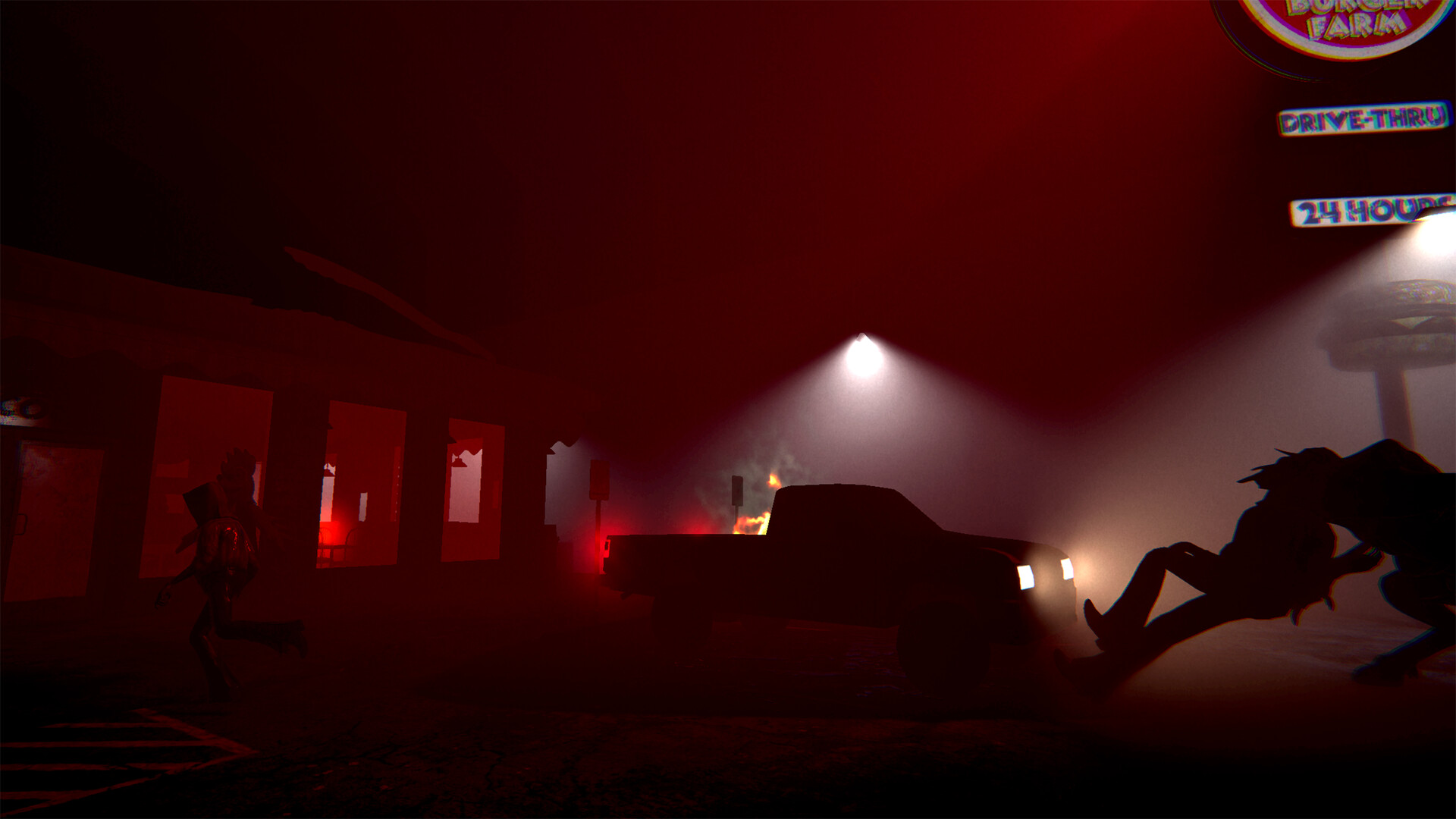
The horror systems are tied directly to restaurant performance. Stability drains during work, mistakes accelerate the loss, overtime increases breakdown pressure, and only survivors receive money at the hatch.
Stability runs from 0 to 100
Stability represents how well the restaurant simulation is holding together. It drains throughout the working phase. Correct orders restore some stability, while mistakes and infractions remove larger chunks.
This creates a useful feedback loop: accurate service slows the horror escalation while also building the cash pot.
Overtime accelerates environmental failure
Overtime begins as soon as quota is reached. The crew can keep earning, but the restaurant breaks down faster with time. Staying is therefore a deliberate wager, not free bonus income.
Asset Joy wakes after clock-out
Joy remains asleep while the crew works. Pulling the clock-out lever wakes her and starts closeout. The better the group manages the restaurant, the longer it can keep her dormant before choosing that transition.
Voice can reveal your position
The game listens for speech. Certain phrases trigger incantations, and yelling during Joy's hunt attracts her. Voice is therefore both a coordination tool and part of the threat system.
Payout happens at escape
The pot is modified by order-type bonuses and a round multiplier, then split among the crew. A player who dies forfeits their share. The developer's example says a two-person team that loses one member leaves with roughly half the pot.
This is the death tax: individual risk changes the group result. An extraction plan should optimize survivors, not only gross cash.
Sources and verification
This page was checked against first-party material on 2026-07-15. We link the originals so you can verify every confirmed mechanic.